
In Summary
- Tell Council what you think at Have Your Say by Mon 31 August
- Attend Council’s feedback session on Sat 22 Aug 10am-12pm at the reserve
- The reserve's primary purposes are environmental conservation and passive recreation; it's part of the Habitat Linkage Plan and Urban Forest Strategy
- The track would be considerably expanded and remove a lot of vegetation
- We support good facilities for bike riders, but not with major impact on wildlife habitat and people's enjoyment of natural open spaces
Where is the Tulip Street Pond Reserve?
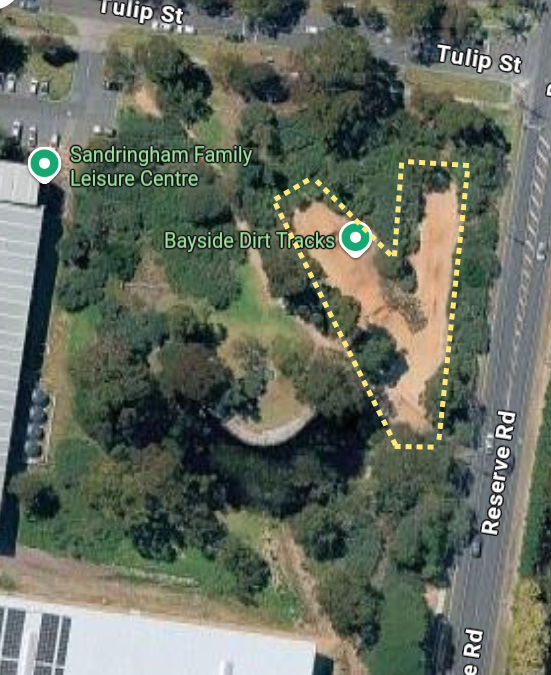
Tulip Street Pond Reserve is on the corner of Tulip Street and Reserve Road in Cheltenham, next to the Sandringham Family Leisure Centre. It includes large trees, Tea Tree scrub and an ephemeral pond.
What is proposed?
Bayside Council has announced a draft Skate and Bike Action Plan, open for public comment until 31 August. One priority project is to expand the area of the dirt track at Tulip Street Pond Reserve, with a budget of around $750,000 over two years.
The Council has also applied for a grant from the Victorian Government's Pick My Park programme for the project.
Here’s the concept spatial plan. The existing tracks are the two sandy areas in a Y shape towards the right in the plan.
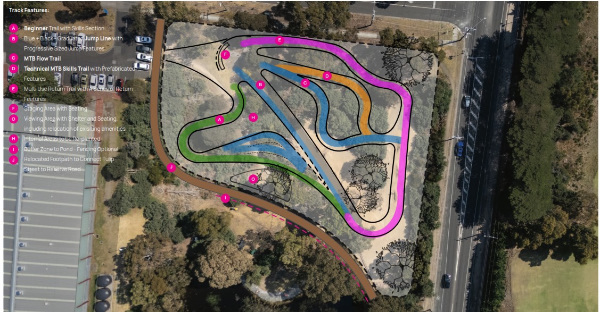
While tall canopy trees would likely be retained, considerable mid-storey and ground-storey vegetation would be removed. Here’s our estimate of how the tracks might look at ground level. The green Tea Tree vegetation shown might be removed, as it is attached to prostrate trunks and branches that may need to be cut.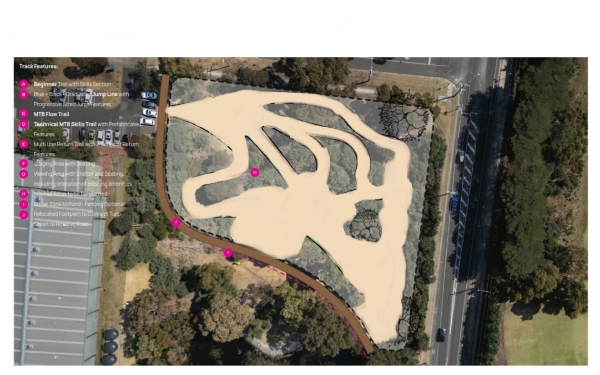
This proposal would take up about half of the land area of this small (1 ha) reserve.
Council officers have told us the biking community like the secluded bushland feel of the tracks and they’ll try to minimise the removal of vegetation. However their action plan pushes visibility from public spaces to enhance feelings of safety.
Why is the reserve important?
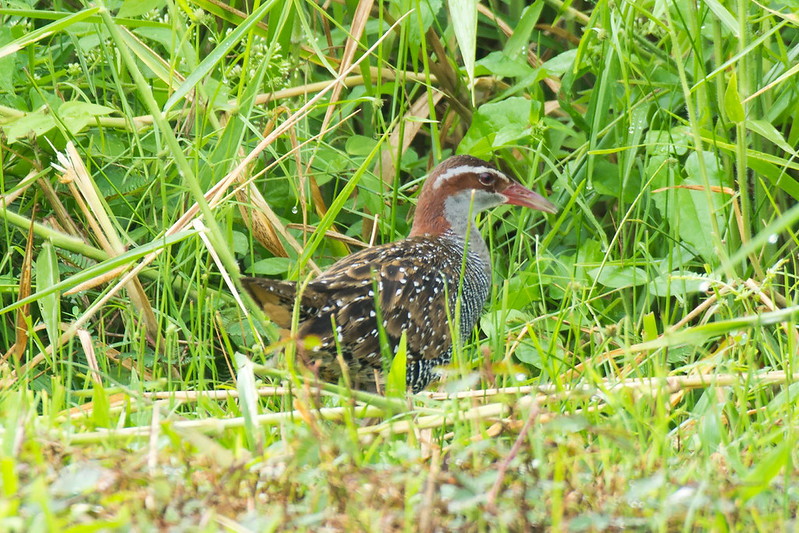
Buff-banded Rail (Sergey Yellseev CC BY-NC-ND 2.0)
Many people have told us they value the reserve as a peaceful place for passive recreation and quiet contemplation. It is also used as a place to educate the public and schoolchildren about wetland life and nature in general.
Bayside has very few wetlands. Low-lying areas were drained many years ago for housing, and artificial lakes and ponds in Bayside's parks have often deteriorated and are no longer home to frogs. FoNW has been conducting monthly frog surveys for the Melbourne Water Frog Census for 22 years and the ephemeral pond here is the best publicly accessible site in southern Bayside. Of course, ponds need surrounding habitat. For example, tree frogs need water to breed but spend most of their time in trees, as their name implies, and eat insects that live on nearby vegetation.
We have found four species of frogs at Tulip St: Peron's Tree Frog, Eastern Banjo Frog (“Pobblebonk”), Spotted Marsh Frog and Southern Brown Tree Frog. Three species of ducks have bred here and graze on the grass in the open spaces of the reserve. The Buff-banded Rail, a wetland-reliant ground dwelling bird now frequents the entire reserve. Numerous other bird species use the reserve, notably the Common Bronzewing pigeon and bush birds (in decline in urban areas) like Brown Thornbills that use the tea tree . Dragonflies, mayflies and other insects and invertebrates use the pond and surrounds.
The reserve was identified as a conservation area and for passive recreation in Bayside’s Open Space Strategy completed only last year.
What are FoNW’s objections and goals?
Friends of Native Wildlife want to make Bayside a better place for people and wildlife. We support new community facilities in appropriate places: larger parks that don't have as much conservation significance and that have more public activity and infrastructure, or brownfield sites. We have no objection to kids having fun and building skills. We have no objection to upgrading the existing jumps within their current footprint to provide a local scale facility.
We think it’s just not possible to both expand the track and retain quality wildlife habitat and the natural setting. The concept undermines previous investment by the Council and is contrary to the existing Habitat Linkage Plan and Urban Forest Strategy. It also undermines the long term contributions many volunteers have made to the environment of the reserve.
At Tulip St, any complete plan should
- restrict the number of new tracks to protect vegetation and space for wildlife and passive recreation
- include water run-off filtering and control, to ensure pollution from bike tyres, chains and gears does not find its way into the pond
- prevent erosion and sedimentation - there is an erosion problem already threatening pond water quality, probably partly due to the largely impermeable surface of the current bike jumps. The existing erosion needs to be remedied, and future erosion prevented.
- retain as much vegetation as possible, especially mid-storey around the borders of the park - we understand the bike users would strongly support this
- develop a proper Environmental Management Plan for the reserve as a whole. This was promised several times by Council in the past, but has not been actioned
- include wildlife-friendly fencing to allow people to enjoy the pond and surrounds and discourage bikes, dogs etc.
What should we do?
Council say it's a concept and subject to consultation. During this consultation, we need to show that many people value the natural qualities of this reserve and don't want it over-developed. So that's where you come in. Please have your say at https://yoursay.bayside.vic.gov.au/skateandbike. Please attend a feedback session with Council officers scheduled at the reserve on Saturday 22 August 10am-12pm. Contact your councillor by phone or email and tell them what you think.
What’s FoNW’s history with the reserve?
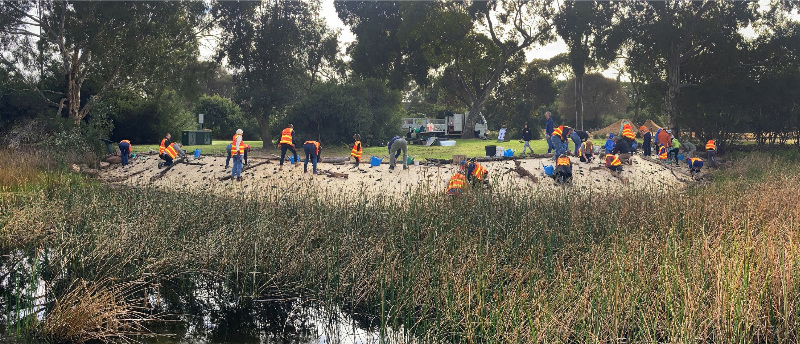
“Hop Along, Help Our Frogs” planting day 2023 - Kerri Valkova
FoNW has been conducting monthly frog surveys at the reserve for 22 years for the Melbourne Water Frog Census. It has the longest history of continuous monitoring in the Census.
We worked with Bayside council to relocate the site for a new basketball stadium, to ensure a corridor and connection between the reserve and the Sandringham Golf Course to the south for wildlife.
Hundreds of our members and community members have planted trees and understorey to improve habitat there over 8 years. FoNW helped to establish a new Friends of Tulip Street Pond Reserve (FoTSPR) last year. The group works monthly in the reserve.


