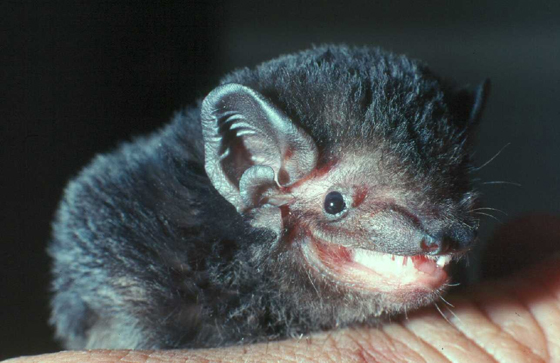
Microbats and Time of Night

What is the best time of night for microbats?

We have analysed a lot of Anabat data since our last update for the Batting4Bayside project. With the help of many of you, we have also collected a lot more data.

So far this project has collected over 12,000 data files for analysis, about one third of which has not yet been analysed. Of the two thirds that has been analysed, roughly 2,500 files contain recognisable bat calls.

One of the questions we had about our microbats relates to when they are most likely to be out and about.

Batting4Bayside: Locations

One of the aims of the Batting4Bayside microbat project is to get some idea as to which species of bat may be found in which area of Bayside. We asked Anabat borrowers to use the Anabat's voice recording feature to record their location to enable us to match bat records with location.

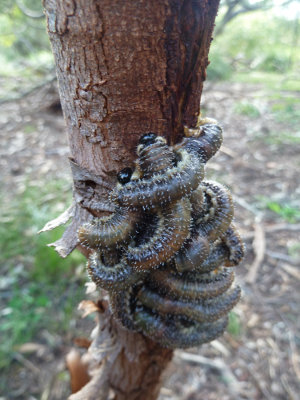
Saw Fly Larvae

Order: Hymenoptera
Subfamily: Perginae
Genus (moths): Symphya
Species: perga

Sawflies

There are about 200 known species of Sawfly in Australia. The larvae of some Sawfly species are green, some black, others brown or off-white, and some are striped, and some are spotted.

An Anabat Overview

With the help of many volunteers, the Batting For Bayside project has been collecting records of microbats in Bayside using Anabat detectors. These detectors can detect and record the high-pitched call made by these tiny little bats as they fly around at night. Microbats may be almost impossible to see, but with the help of this technology we can hear their presence.

An added benefit of the Anabat detectors is that we can download the calls to a computer. Using special software, we then try to identify the bat species.

Invisible Friends in the Night

They frequent the night, hidden by darkness. They are noisy, yet we never hear them. They gobble up those we dislike.

They are the microbats.

These little bats may look like small versions of the more familiar megabats, or flying foxes, but they are very different.

Tiny

The megabats get their name in part due to their size. For example, the common species seen in Melbourne, the grey-headed flying fox, has a body length around 25cm, a wingspan about 1m, and weighs up to 1kg.
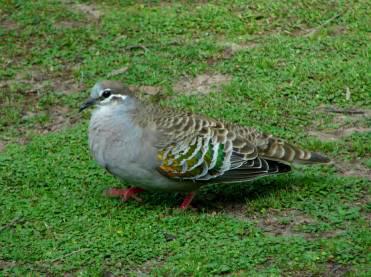
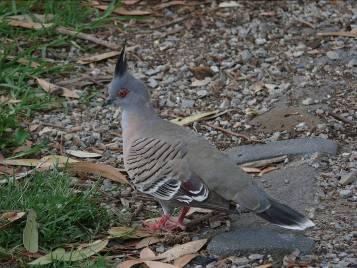
Should You Feed the Animals?

There’s good feeding and bad feeding.

Good food

Good food is the natural diet of the bird, reptile or mammal - for example, nectar, pollen, seeds and fruits of local native plants. Good food is provided in a balanced manner.

An excess of nectar-bearing plants can cause an increase in such species as Noisy Miners or Wattlebirds.

The best ‘good food’ is water. Provide water in sheltered spots in shallow dishes. Shallow pools on the ground will attract butterflies and may be used by reptiles.

Pages